About Hydraulic & Pneumatic Fittings
Hydraulic & Pneumatic Fittings
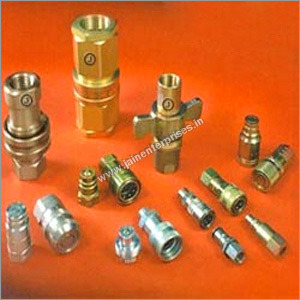
Being an authentic manufacturers and exporters of Hydraulic & Pneumatic Fittings, we have marked a distinct position in the industry. These fittings are made using high grade carbon steel, stainless steel and brass material that is sourced from trusted vendors of the market. Our range of fittings is known for corrosion resistance, seamless finish and dimensional accuracy. These fittings find its application in a number of industries like instrumentation, refrigeration, hydraulic, pneumatic, automotive and engineering. Before the final delivery, Hydraulic & Pneumatic Fittings are duly checked on various parameters to ensure fine finish.
Other information:
Type of Fittings
- Nuts & Ferruls
- Swivel Branch Tee
- Reduction Sleeve
- Taper Male Branch Tee
- Bulkhead Union Elbow
- Swivel Elbow
- Equal Cross
- Equal Elbow
- Equal Tee
- Welding Connector
- Parallel Male Branch Tee
- Taper Male Stud. Elbow
- Parallel Male Stud. Coupling
- Parallel Female Stud. Coupling (Metric Size)
- Cam lock
- Swivel Banjo Connector
- Parallel male Stud. Elbow
- Swivel Branch Tee Connector
- Straight Coupling
- Quick Release Coupling
- Inch Size Outside Diameter Tubing
- Saddle Boss
- Bulkhead Union.
Superior Performance and Material SelectionOur fittings are crafted from high-quality brass, stainless steel, carbon steel, or aluminum, each selected for its unique properties and compatibility with demanding hydraulic and pneumatic applications. This range allows selection based on specific pressure ratings, corrosion resistance, and system requirements.
Versatile Structures and Easy InstallationAvailable as unions, elbows, tees, couplers, adapters, and connectors, these fittings can be effortlessly integrated into various system configurations. Their design emphasizes efficiency, leak resistance, and user-friendly installation, supported further by compatible accessories like seals and clamps.
Ideal for High-Pressure ApplicationsWith pressure ratings reaching up to 6000 PSI, our fittings meet the needs of critical operations in automotive, industrial automation, and heavy machinery. Their high integrity and corrosion resistance help maintain safe, reliable connections even in harsh environments.
FAQs of Hydraulic & Pneumatic Fittings:
Q: How do I choose the right material for hydraulic or pneumatic fittings?
A: Selecting the appropriate material depends on your applications pressure, compatibility with system fluids, and environmental conditions. Brass and stainless steel offer superior corrosion resistance, while carbon steel is robust for high-pressure environments. Aluminum is lightweight and suitable for less corrosive settings.
Q: What operating pressures can these fittings handle?
A: The fittings are designed for operating pressures up to 6000 PSI, with exact limits varying according to the fitting type and material. Always verify the specific rating for your selected fitting before application.
Q: Where are these fittings commonly used?
A: They are extensively utilized in automotive systems, industrial automation, hydraulic machinery, and pneumatic lines. Their high leak resistance and durability make them suitable for demanding environments.
Q: What is the benefit of using a union, elbow, tee, coupler, or adapter structure?
A: Each structure serves a unique purpose: unions connect or disconnect lines easily, elbows change flow direction, tees split or merge flow, couplers provide quick connections, and adapters join different thread sizes or types. This versatility ensures optimal layout and functionality for complex systems.
Q: How should I install these fittings for maximum leak resistance?
A: Proper installation involves ensuring clean, burr-free threads and using compatible seals, clamps, or locking nuts. Following manufacturer guidelines helps achieve high leak resistance and long-term reliability.
Q: When should accessory items like seals or locking nuts be used?
A: Seals, clamps, and locking nuts should be used when extra security or leak prevention is required, particularly in high-pressure or vibration-prone applications. They enhance the integrity and stability of the fitting connections.

 Send Inquiry


 Send Inquiry

 Send Inquiry
 English
 Spanish
 French
 German
 Italian
 Chinese (Simplified)
 Japanese
 Korean
 Arabic
 Portuguese